
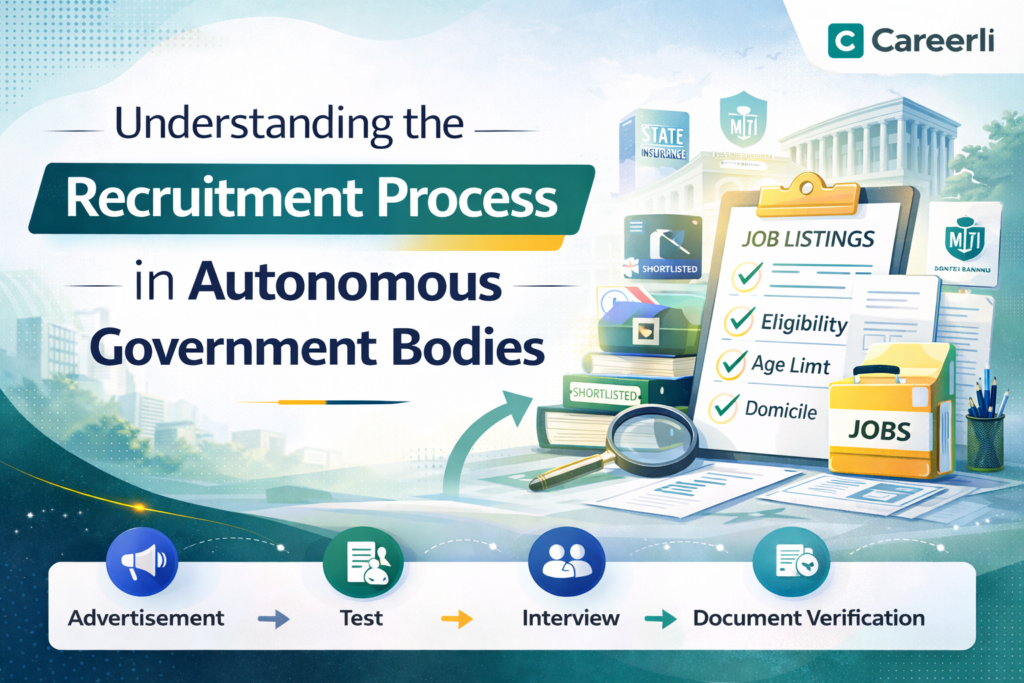
Recruitment in Pakistan’s public sector does not always follow a single uniform pattern. While many federal and provincial departments hire through Public Service Commissions, autonomous government bodies often follow a slightly different recruitment structure. For candidates, this difference can be confusing.
Autonomous institutions operate with administrative independence, meaning they manage their own hiring procedures within a regulatory framework. Understanding how recruitment works in these bodies can help applicants prepare better and avoid common misunderstandings.
What Are Autonomous Government Bodies?
Autonomous government bodies are institutions that function independently from direct ministerial control but remain under government oversight. They have their own administrative boards, financial structures, and HR departments.
Examples include public sector hospitals, insurance corporations, regulatory authorities, and specialized institutions. Unlike traditional departments, they may not always recruit through FPSC or provincial commissions.
How Recruitment Begins
The hiring process typically starts when the governing board or management identifies vacant posts. These vacancies may arise due to expansion projects, retirement, new development initiatives, or restructuring.
Once approval is granted internally, the institution advertises the positions through:
- Official website
- National newspapers
- Online job portals
- Testing agencies (if applicable)
For example, specialized financial and actuarial roles such as those announced in
State Life Insurance Karachi Actuarial Jobs
are typically managed directly by the institution rather than through a public service commission.
Eligibility Criteria and Job Structure
Autonomous bodies often design eligibility criteria tailored to their operational needs. Unlike traditional BPS-based roles, some positions may offer market-competitive salaries or contract-based packages.
Eligibility sections usually specify:
- Required educational qualifications
- Professional certifications
- Experience in relevant field
- Age limits (if applicable)
Candidates must read these criteria carefully because autonomous institutions often apply strict scrutiny during shortlisting.
Application Submission Process
Most autonomous organizations accept online applications. Some may require:
- Online application forms
- Submission via email
- Courier-based document submission
- Application processing fees
Unlike Public Service Commissions, the timeline may be shorter, and document verification may occur earlier in the process.
Screening and Testing Phase
Autonomous bodies may conduct recruitment tests internally or outsource testing to third-party agencies. The testing format varies depending on the nature of the role.
For example, healthcare institutions such as those advertising
MTI Bannu Jobs 2026
may conduct subject-specific written tests or professional skill assessments to evaluate candidates’ technical competence.
Tests may include:
- MCQ-based written exams
- Technical subject tests
- Skill-based practical evaluations
- Psychometric assessments
Shortlisting and Interview Stage
After the screening phase, shortlisted candidates are invited for interviews. Interview panels typically consist of:
- Board members
- Senior management officials
- Subject specialists
- HR representatives
Interviews focus on professional competence, problem-solving ability, communication skills, and organizational fit.
Contract vs Regular Appointments
One significant difference between autonomous bodies and traditional government departments is the nature of employment contracts.
Many autonomous institutions offer:
- Contract-based positions
- Renewable annual contracts
- Project-based appointments
- Market-based salary packages
Some roles may later convert to regular status depending on policy and performance.
Merit and Transparency
Although autonomous bodies operate independently, they are still bound by government transparency regulations. Recruitment decisions are generally merit-based, and selected candidates are notified through official channels.
However, unlike Public Service Commissions, detailed merit lists may not always be publicly displayed.
Document Verification and Final Selection
Before issuing appointment letters, institutions verify:
- Educational credentials
- Professional certifications
- Experience letters
- Identity documents
Medical examinations and police verification may also be required depending on the role.
Key Differences from Public Service Commission Recruitment
While both systems aim for merit-based hiring, autonomous body recruitment differs in several ways:
- Greater administrative flexibility
- Faster recruitment timelines
- Contract-based compensation models
- Institution-specific selection criteria
Public Service Commission recruitment, on the other hand, follows a more standardized and centralized examination structure.
Common Mistakes Candidates Make
Applicants sometimes assume that autonomous bodies follow the same procedures as FPSC or PPSC. This misunderstanding can lead to:
- Late applications
- Incomplete document submission
- Ignoring specific eligibility conditions
- Underestimating interview preparation
Each institution’s recruitment process should be reviewed individually.
Final Thoughts
Autonomous government bodies play a significant role in Pakistan’s public sector employment landscape. Their recruitment systems offer flexibility and specialized evaluation processes tailored to institutional needs.
By understanding how these bodies advertise vacancies, conduct screening tests, and finalize selections, candidates can approach applications with clarity and confidence. Always review the official advertisement carefully and prepare according to the specific requirements mentioned.
A well-informed applicant is better positioned to succeed in competitive public sector recruitment.